Portfolio
Stories shaped in clay.
Selected narrative reliefs, relief vessels, and earlier ceramic work tracing a continuing interest in story, surface, and sacred narrative.
Featured work
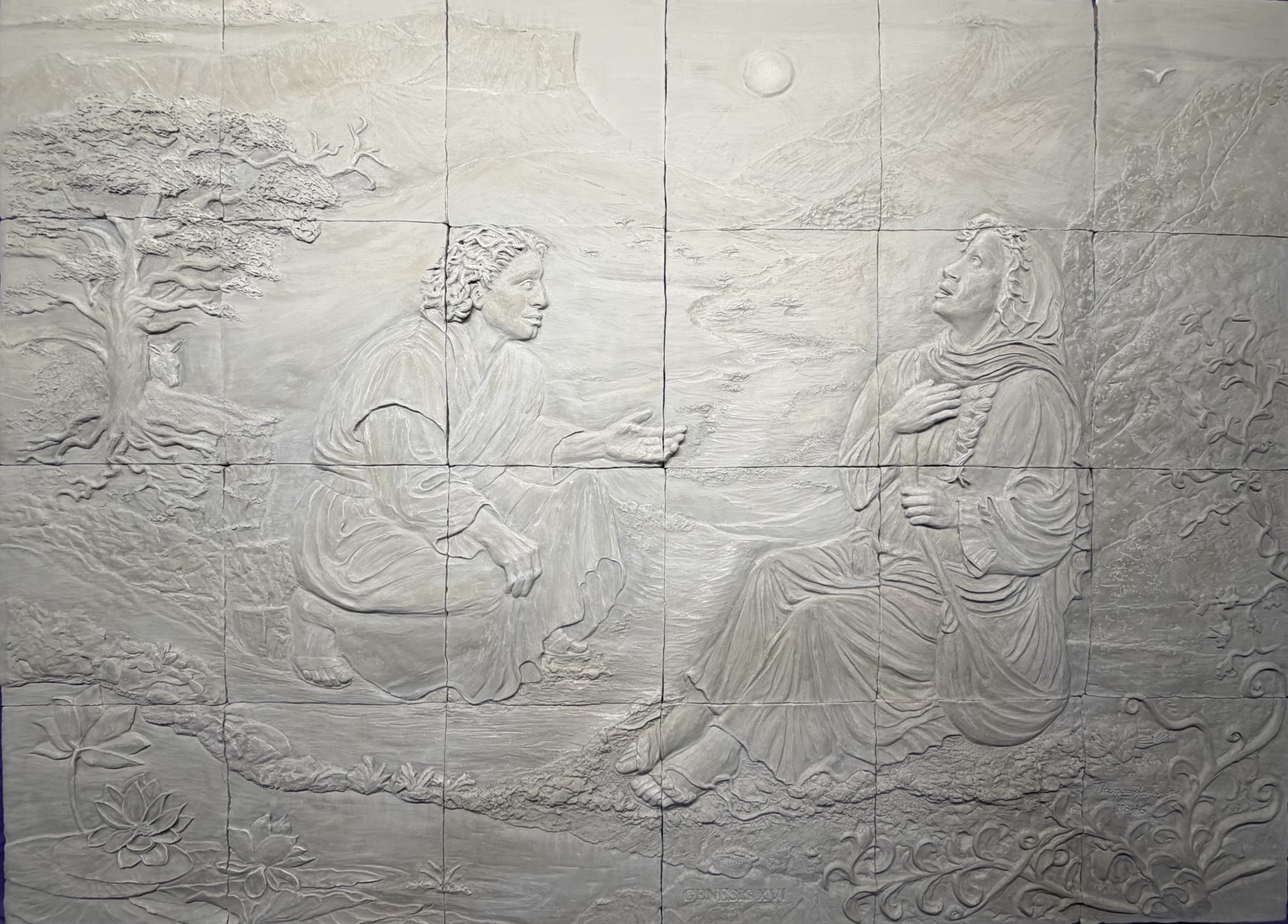
Seen in the Wilderness
A large-scale ceramic narrative relief centered on Hagar's encounter in the wilderness and the moment she recognizes the God who sees her. Work No. 7845 · 2026 · 36 × 50 × ¾ in. · Cone 10 stoneware · Displayed at Grace Church, Westfield, Indiana.
View the workNarrative reliefs
Biblical stories in dimensional clay.
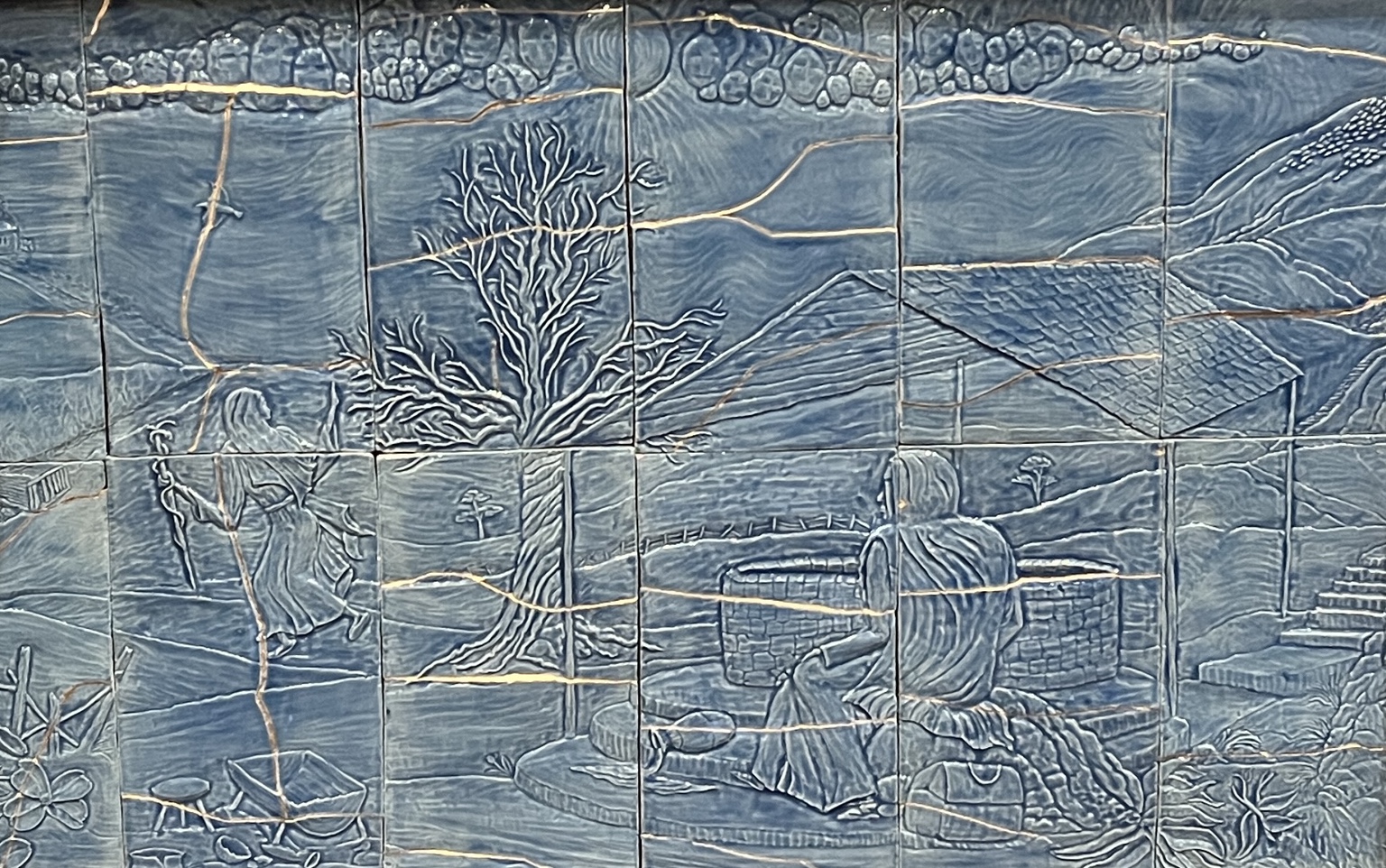
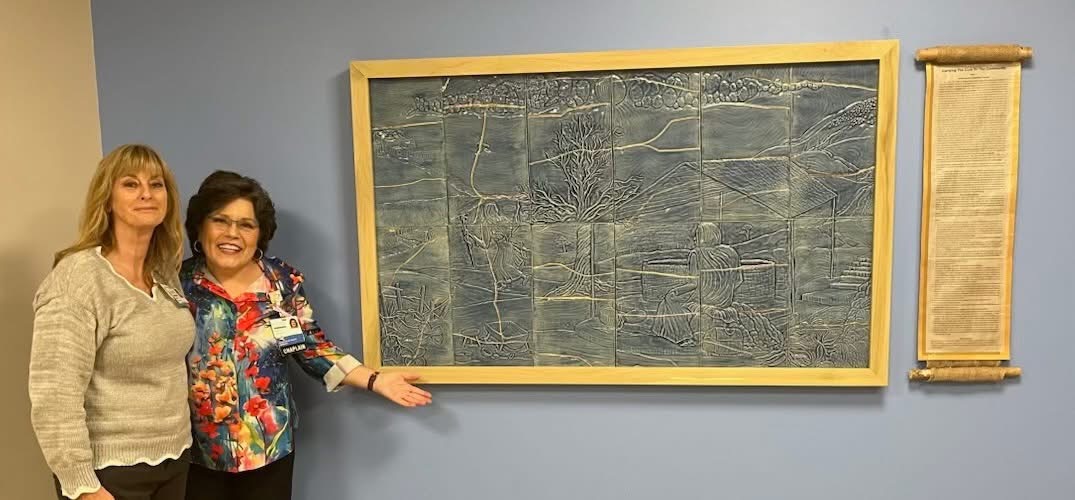
The Samaritan Woman
John 4:28–30, 39–42 · 2024 · Stoneware · Cone 10 oxidation · Celadon glaze
This large-scale tiled narrative relief depicts the Samaritan woman in the moments immediately after she meets the Messiah at the well. Her life is changed by the encounter, and she immediately runs back to her community—the very people who considered her defiled and an outcast—to carry the life-changing news.
The scene takes place at noon, as told in John 4:6, with the sun positioned high above the landscape. In the upper left, her community appears in the distance as the place she is running toward. In the upper right, the 99 sheep recall Jesus leaving the many to seek the one. She leaves so quickly that her water jar is left behind and tips over.
Because the relief was created for a hospital, Jesus is depicted as the Great Physician, with a doctor’s satchel at His feet. The woman carries a staff recalling the one Moses lifted in the wilderness for healing—imagery that also echoes the medical symbol today. She now carries a spiritual message of healing back to her community.
The landscape carries additional layers of meaning. The main tree is shaped like a cross, prophetic of what will happen to Jesus, while two smaller cross-shaped trees foreshadow the crosses of the two thieves. Across the upper portion of the relief, the clouds reflect the “great cloud of witnesses” of Hebrews 12:1.
This was my first very large tiled narrative relief and an important transition toward the work I continue today: depicting the pivotal human moments when an encounter with God changes everything.
Permanent installation: Ascension St. Vincent Hospital, Anderson, Indiana
Work in development
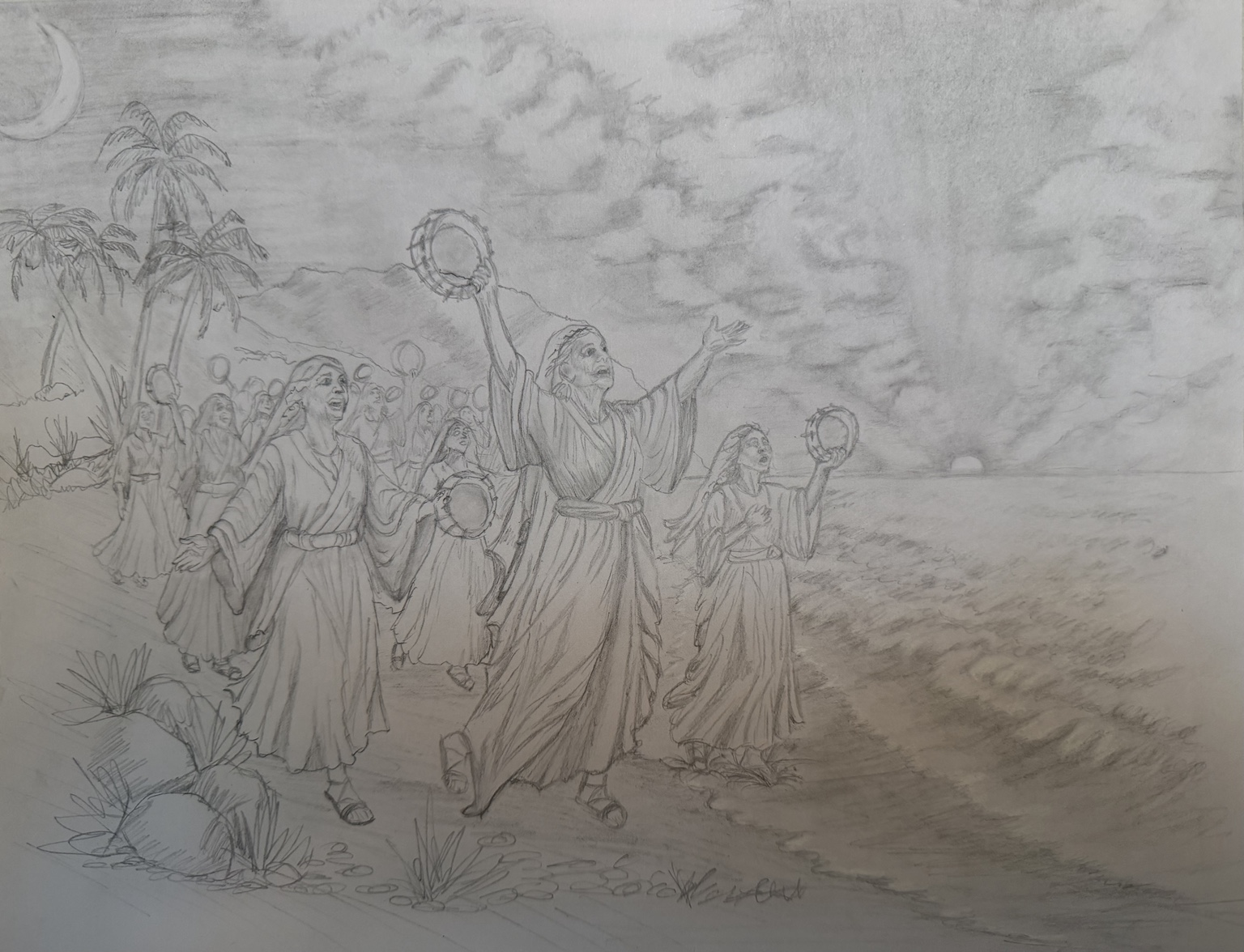
Miriam: Leading Song and Dance at the Sea
Preliminary drawing for a ceramic narrative relief · Exodus 15
In developmentRelief vessels & earlier narrative work
Storytelling before the wall reliefs.
These pieces show the development of narrative imagery across vessels and smaller relief surfaces.
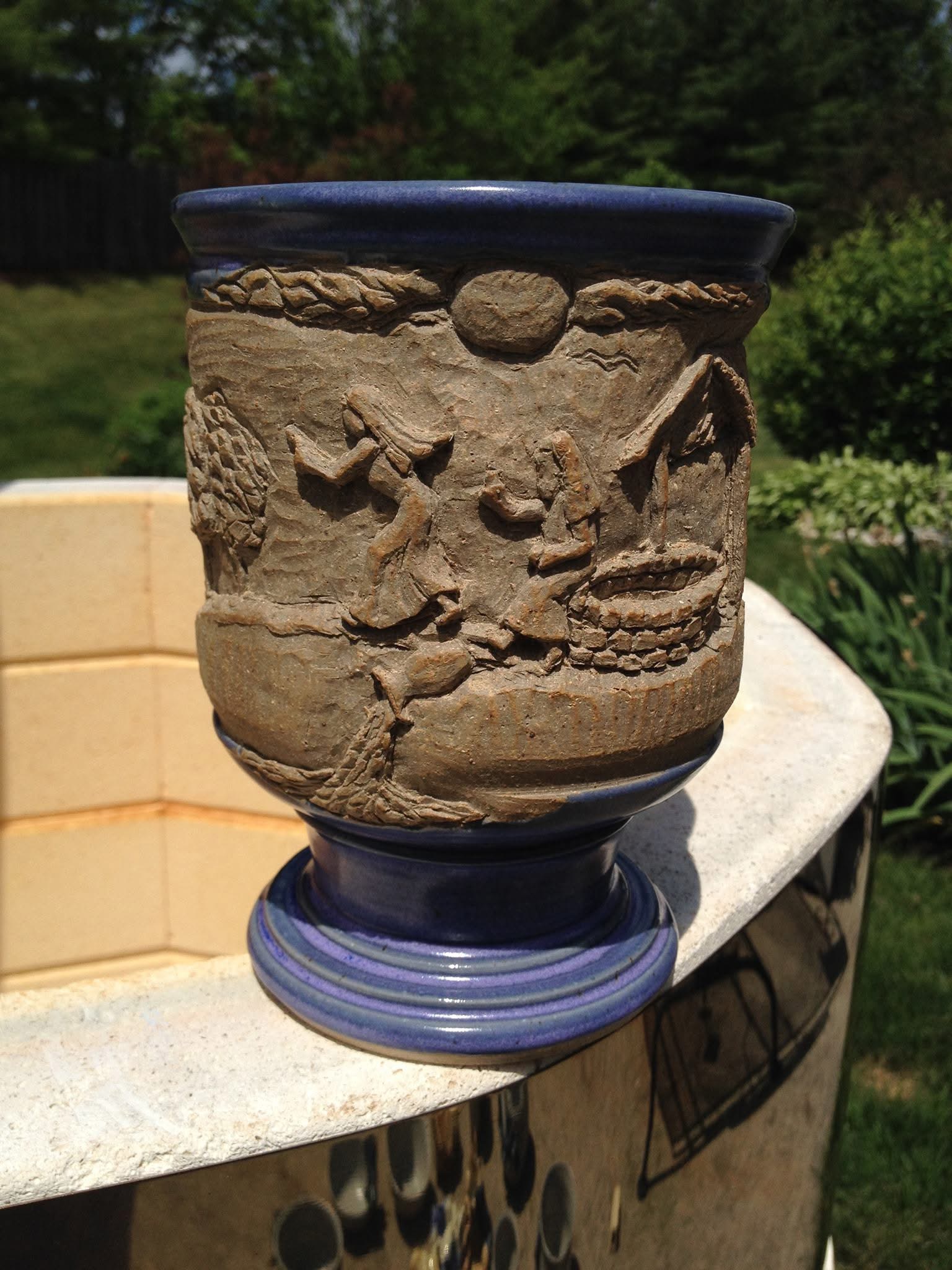
The Samaritan Woman
Narrative Relief Vessel, 2015
Stoneware, Cone 10 reduction
The moment after the Samaritan woman recognizes that she has encountered the Messiah. Leaving her water jar behind, she returns to her community to tell others about Jesus and invite them to come and see for themselves.
Selected Pottery
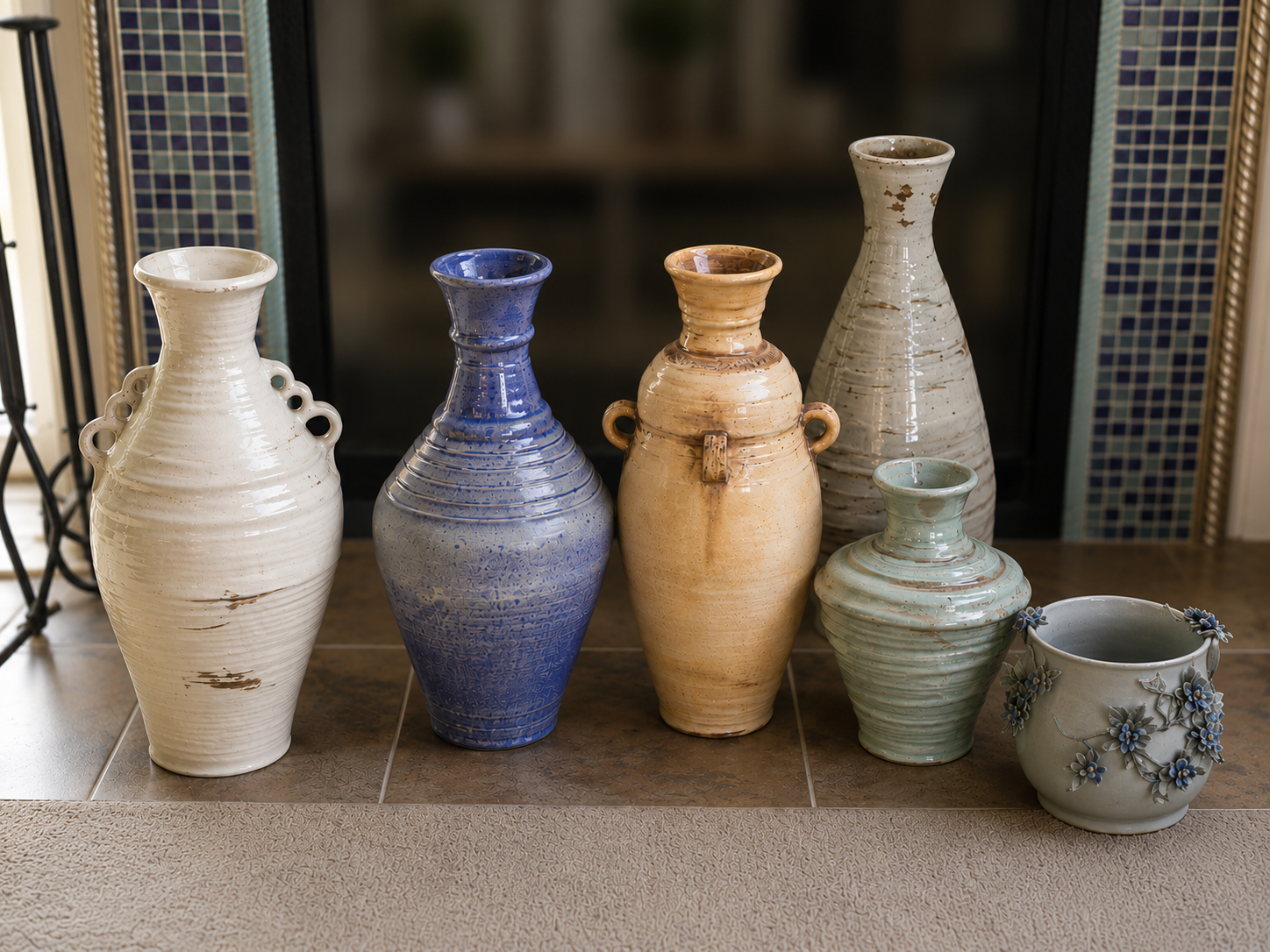
Earlier functional work reflecting a longstanding engagement with clay, form, and surface.
From vessel to narrative relief
Clay became a language for story and ministry.
When I first began learning to make vessels on the potter’s wheel, I wanted the work to carry meaning beyond the object itself. I was drawn to the biblical image of God as the Potter and ourselves as the clay—the work of His hands, continually shaped and formed for His purposes. Isaiah 64:8 · Ephesians 2:10
That image became both part of my work and part of my ministry. With a portable potter’s wheel, I began teaching about God, the Master Potter, using the physical process of shaping clay to illustrate how God forms our lives with purpose and hope. Over time, I shared this message at retreats, seminars, conferences, and church services across the United States, as well as during mission trips to Uganda and Rwanda.
Yet I continued to look for ways for the clay itself to tell more of the story. I began carving biblical narratives directly into my vessels. One of those early large-scale narrative works was created in 2024 for the employee entrance of Ascension St. Vincent Hospital in Anderson, Indiana, where I served as a chaplain. It depicted the Samaritan woman after her encounter with Jesus at the well. Having realized she had encountered the Messiah, she leaves her water jar and returns to her community to share the good news.
As my relief work developed, the vessel gradually gave way to the wall as a place for storytelling. With Seen in the Wilderness, the narrative moved fully into sculptural relief—allowing me to explore not only a biblical event, but the human moment in which God is encountered.
Stoneware · Cone 10 oxidation · Celadon glaze
Large-scale narrative ceramic relief permanently installed at Ascension St. Vincent Hospital in Anderson, Indiana, where I served as a chaplain. Inspired by John 4:1–42, the work depicts the Samaritan woman returning to her community after encountering Jesus at the well, carrying the news that she has met the Messiah.
An evolving body of work
The story continues in clay.
Future narrative reliefs will continue this exploration of biblical stories and the human moments in which God is encountered.
Learn about commissions