Narrative Relief
Seen in the Wilderness
The story
The God who sees.
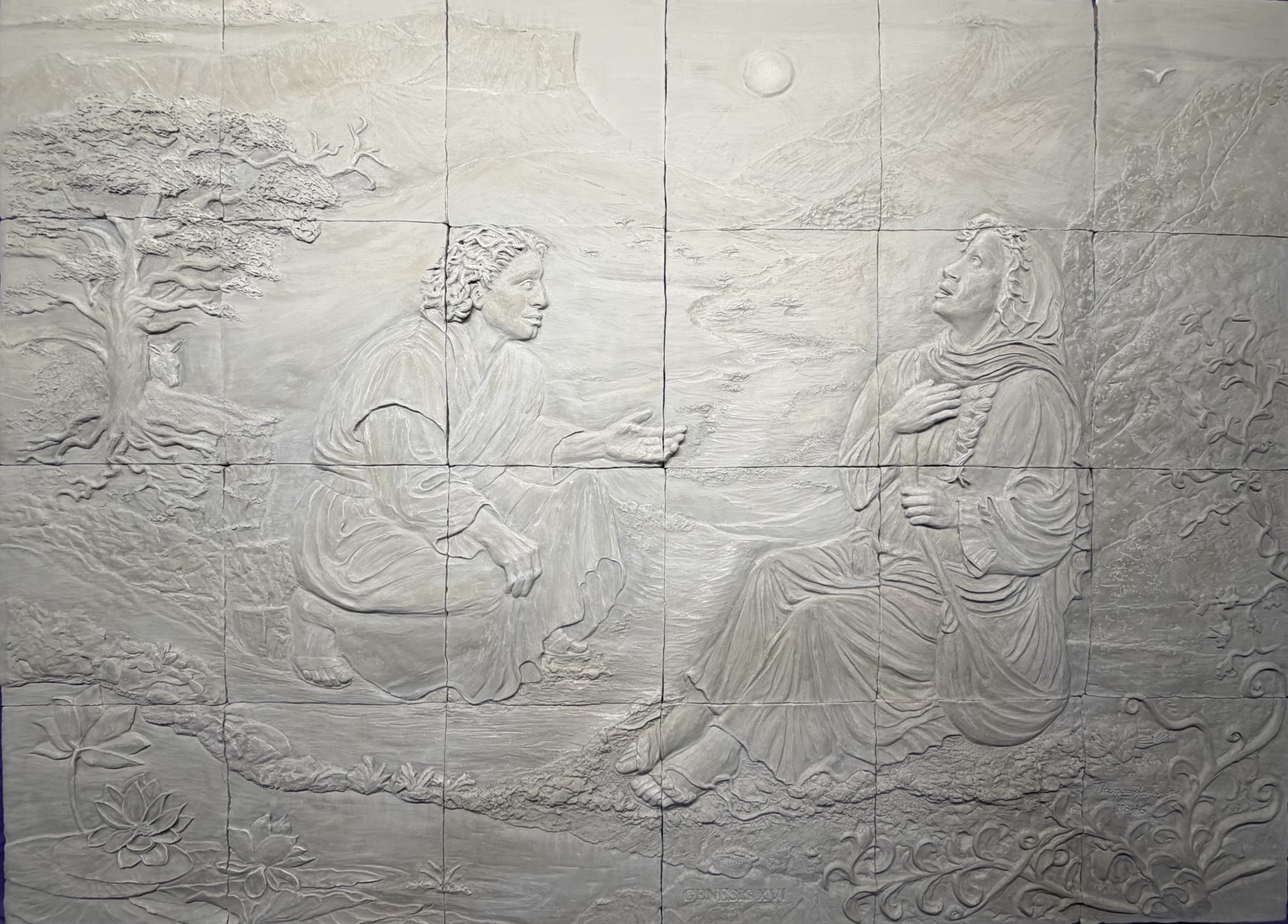
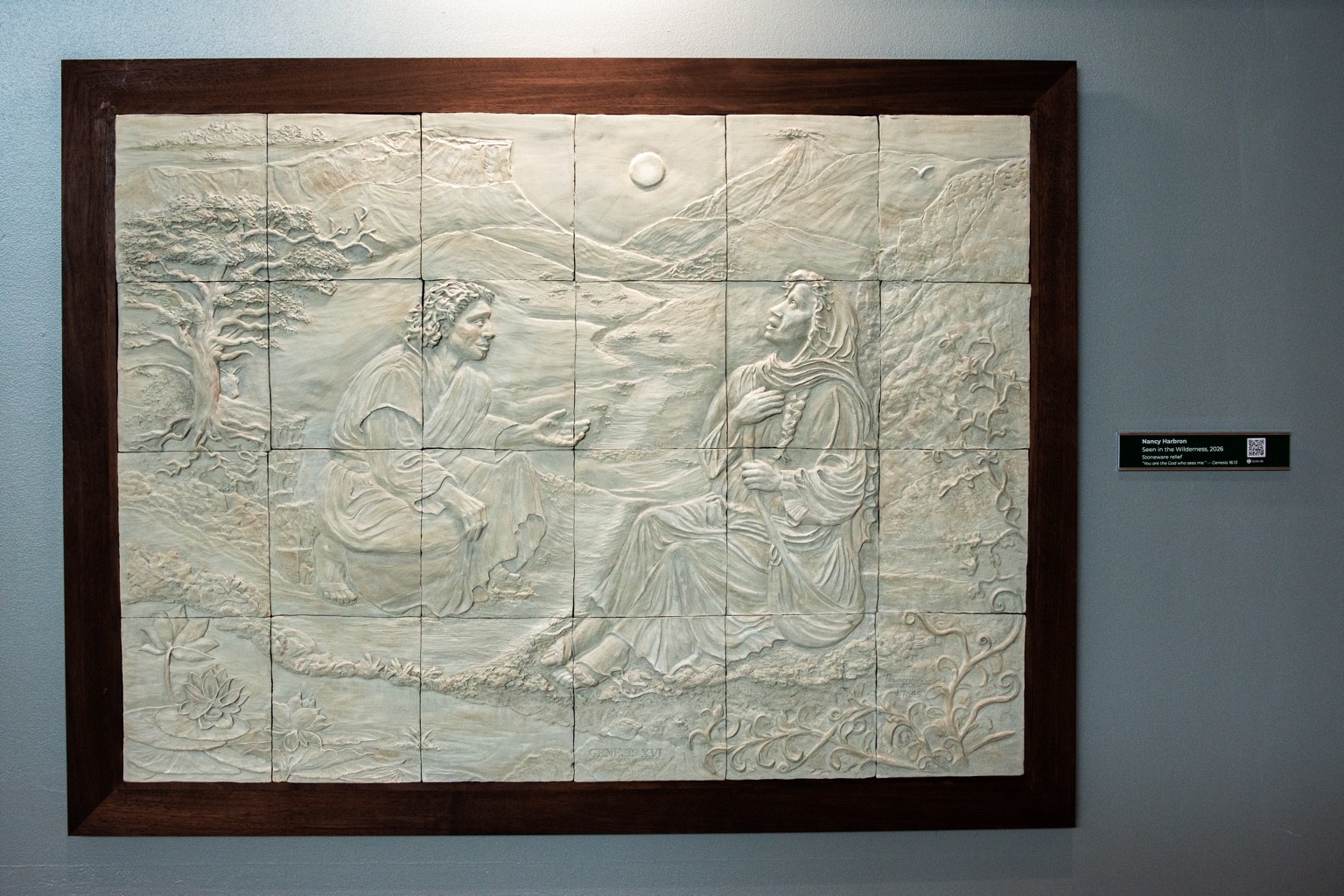
Seen in the Wilderness explores the encounter between Hagar and the angel of the Lord in Genesis 16. Hagar has fled into the wilderness—pregnant, vulnerable, and separated from the household she has known—when she is found beside a spring.
The relief focuses not simply on the event, but on the emotional moment within it: the experience of a woman who may have felt unseen discovering that God knows where she is, knows what she has endured, and calls her by name.
Harbron numbers her ceramic works sequentially rather than dating each piece individually. Work No. 7845 marks this relief as the 7,845th ceramic piece she has made.
“You are the God who sees me.”
Genesis 16:13Looking closely
A landscape that carries the story.
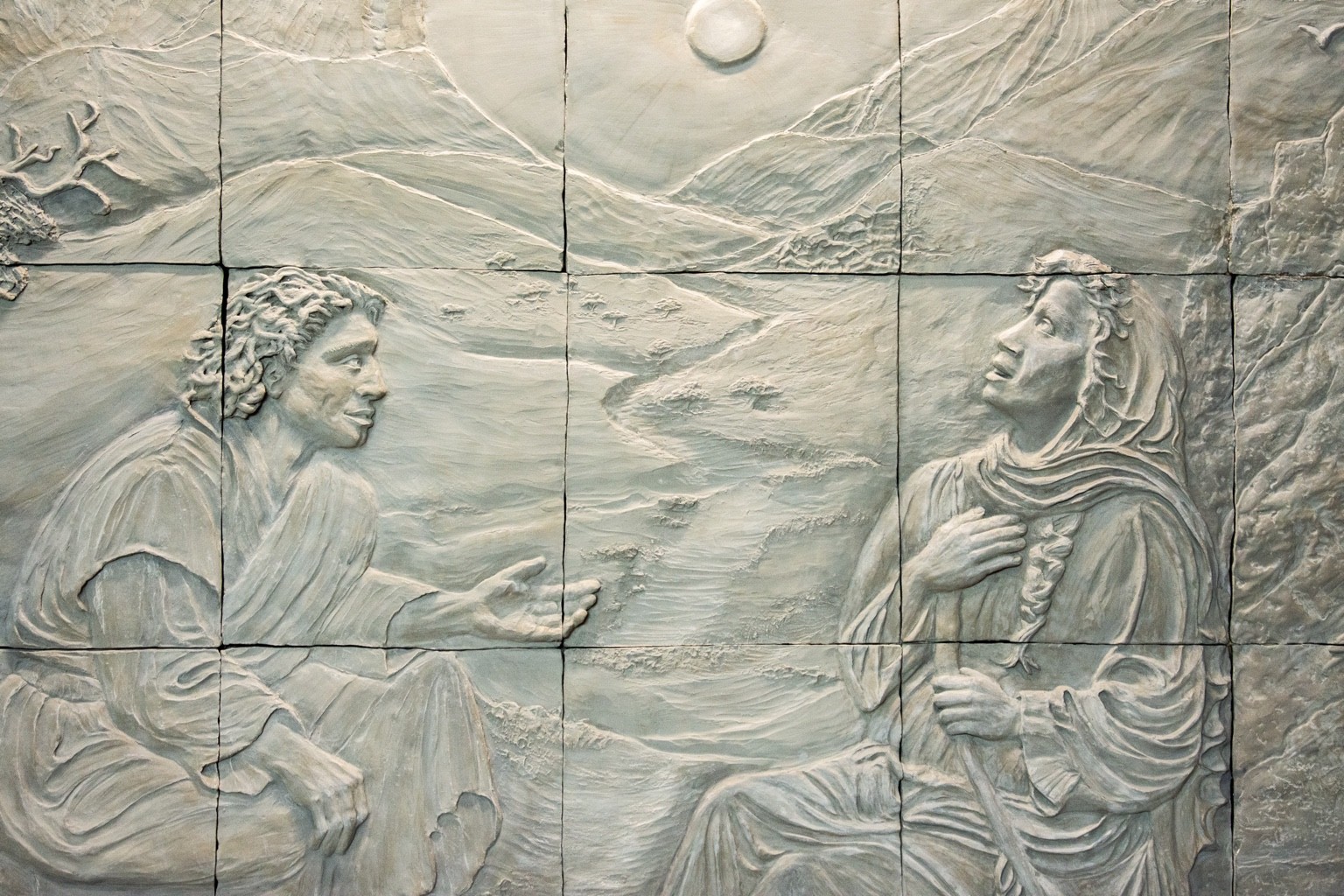
Hagar and the angel are held within a broad wilderness landscape. The spring, rocks, tree, distant terrain, animals, and path are not simply background details; together they create a physical sense of distance, exposure, and journey.
The figures are modeled in shallow relief so that light becomes an active part of the composition. As illumination moves across the ceramic surface, gestures and expressions emerge from the surrounding landscape, allowing the narrative to unfold gradually rather than all at once.
Artist's intention
Not simply to illustrate the passage, but to create a place where the viewer can enter it.
The work invites the viewer to remain with Hagar at the spring: to notice her posture, the space between the figures, and the quietness of the encounter. The ancient story becomes a meditation on what it means to be seen in a place of uncertainty.
Artist & scale
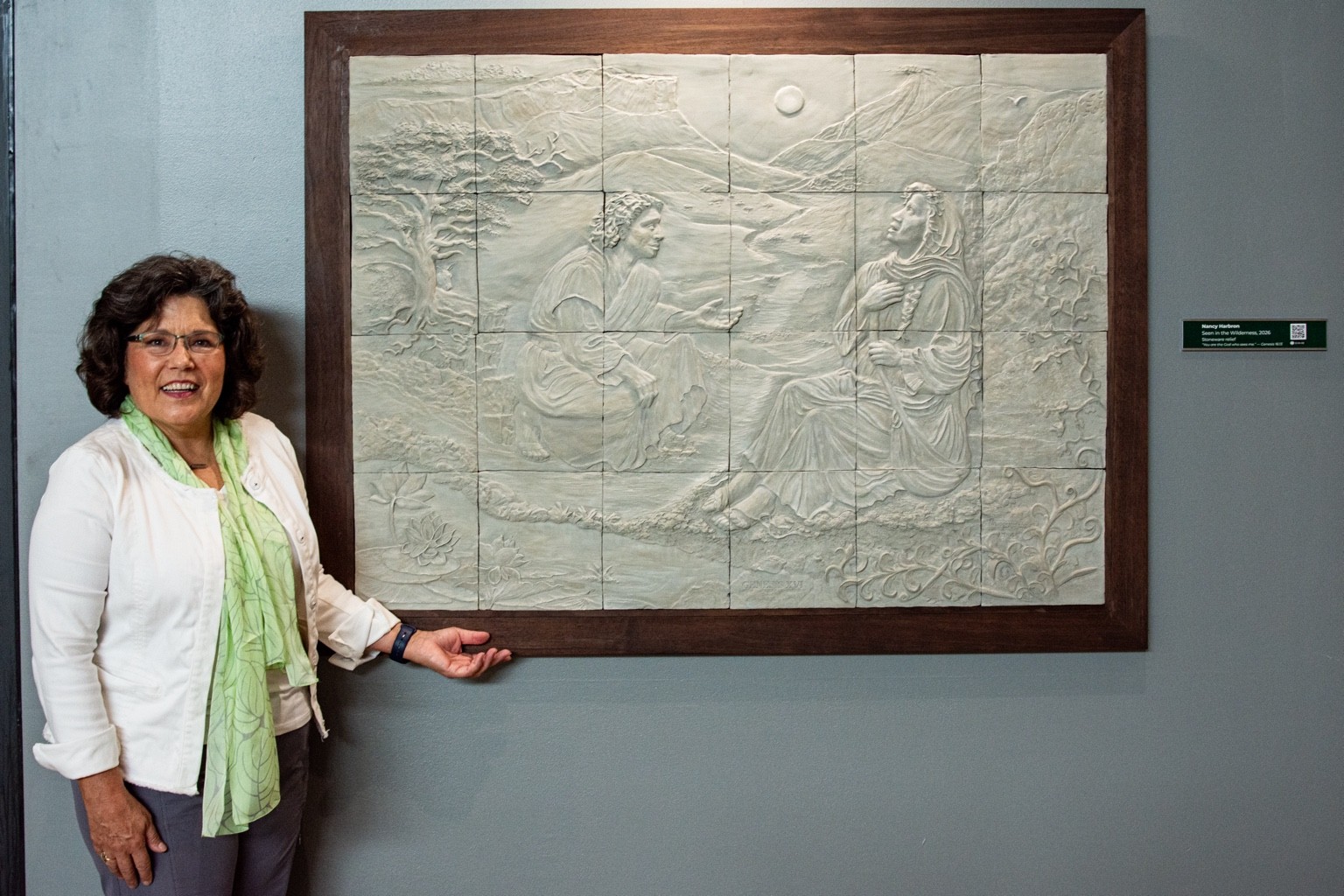
A large-scale work shaped for a public space.
Nancy Harbron with Seen in the Wilderness after installation. The view gives a sense of the physical scale and architectural presence of the finished relief.